The $4.4B Asset That's Still Open.
And Almost Nobody Understands Why.
Not because of valuation. Not because of politics.
Because the investor didn't understand how this deal actually works.
And that changed everything.
They had the banking backing.
They still failed.
That layer is not publicly documented. It is the entry point.
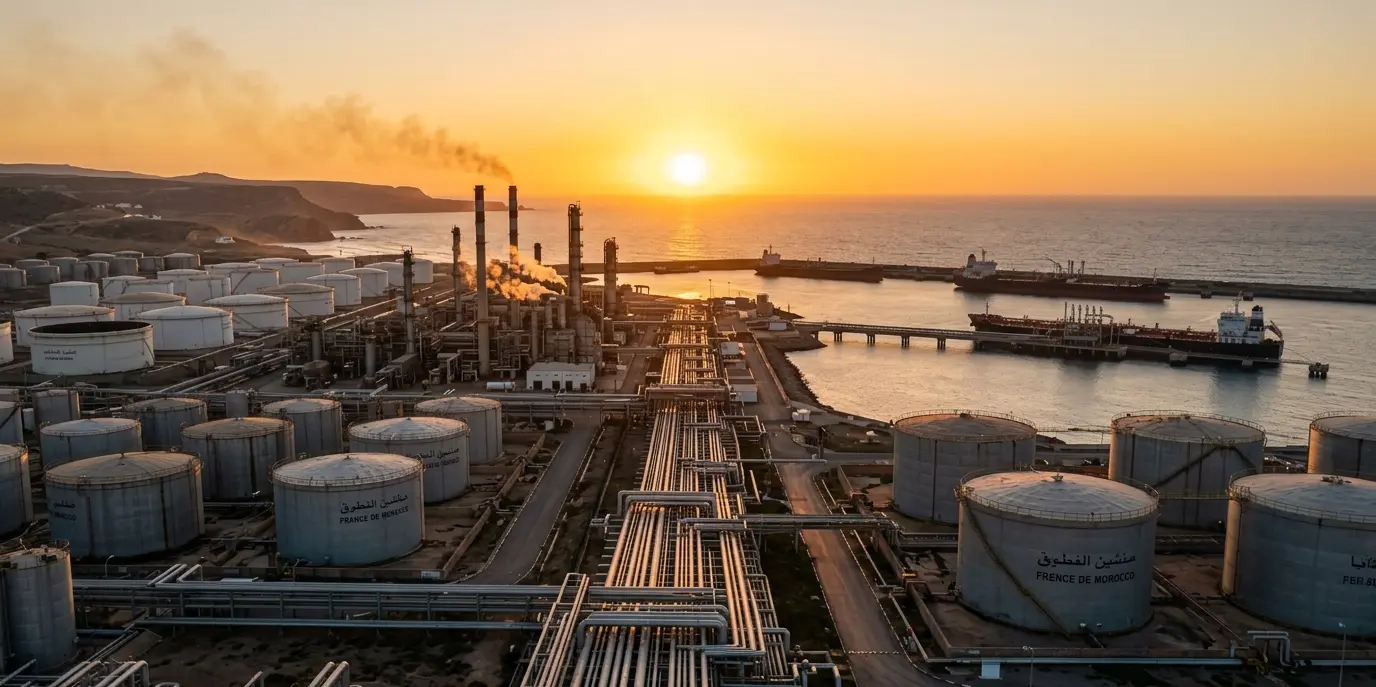
Somewhere on the Atlantic coast, 25 km from Casablanca, sits one of the most strategically significant energy assets in North Africa.
Completely inactive. Legally locked. And quietly — still open.
Since its shutdown in 2015, Morocco has been importing 100% of its refined fuel. The cost runs into billions every year. Which means one thing:
Whoever controls this asset doesn't just own infrastructure.
They control a critical piece of national energy sovereignty.
"This is not a standard PPP. This is not a public tender. And this is exactly where most investors fail."
Supremium International — La SAMIR Strategic Brief, April 2026The acquisition path runs through a specific legal process — one with requirements that $3.5 billion of capital recently failed to meet. Not because the offer was too low. Because the approach was wrong.
Morocco's PLF 2026 — the largest national investment programme in the country's history — explicitly targets energy security. The political context, the sovereign interest, and the commercial opportunity are aligned. What's missing, for most investors, is the entry architecture.
There are only a few ways to approach this correctly. Most of them are not public. None of them are obvious. What you are reading is the entry layer — not the deal.
On February 27, 2026, the highest bid ever submitted for La SAMIR was rejected by the Commercial Court of Casablanca. The offer came from a well-capitalised group. The financing was real. The price was serious.
Because they misunderstood one critical layer of this deal. The failure was not financial. It was structural. A commercially serious offer was eliminated on grounds that most investors don't even know exist. The exact layer they missed is documented — and is part of what Supremium delivers to qualified investors only.
Most Investors Don't Know Any of Them.
We've mapped each path — its legal feasibility, its timing, and what it actually requires. None of the details are published here.
High exposure.
Rarely executed correctly.
Structurally complex.
Requires access.
But only if
positioned early.
It Is a Specific Window.
The liquidation process has been active for 9 years. In that time, multiple offers have been attempted. None have succeeded. The window has remained open — but it will not stay open indefinitely.
The rejection of the $3.5B offer in February 2026 reset the clock. For a qualified investor who approaches this correctly, that reset is an opportunity. For one who doesn't — it's another rejection.
What you are reading is the surface. The deal — the structure, the process, the numbers, the contacts — lives behind a qualification review.
We've been mapping this deal from the inside: the legal structure, the access points, the decision flow, and what actually gets approved — and what gets rejected — at the Commercial Court of Casablanca.
That intelligence is not published. It is delivered to investors who pass qualification. The full brief includes the acquisition architecture, the government alignment path, and the execution roadmap — none of which appears in any public source.
This Is Real.
Not Enough to Access It.
The acquisition structure, the financial model, the legal requirements, the government contacts, and the execution roadmap are not published here. They are delivered to investors who pass qualification. Capital moves quickly in this type of process. The investor who understands the architecture first positions first.